|
|
[ Apple ] [ Samsung ] [ google ] [ Xiaomi/Poco/Redmi ] [ Motorola/Lenovo ] [ ZTE / Nubia / Red Magic ] [ BBK ElectronicS ] [ Transsion Holdings ] [ Huawei/HonoR ] [ HMD Globale/MicroSoft ] [ Sony ] [ Alcatel/TCL ]
|
|
|
|
T3
05/06/2014 15:29


Le fabricant Sony étoffe sa gamme de smartphones Android avec un modèle Xperia T3 positionné en milieu de gamme.
Livré avec le système Android 4.4.2 KitKat, ce smartphone Sony Xperia T3 fait en effet appel à la plate-forme Qualcomm SnapDragon 400, s’équipant ainsi d’un processeur ARM Cortex-A7 quadruple cœur à 1,4 GHz, d’une mémoire vive 1 Go et d’une solution graphique Adreno 305.
Avec lui, on profite d’une dalle IPS 5,3 pouces 720p ( définition 1 280 x 720 pixels ), d’une compatibilité 4G / LTE catégorie 4 ( jusqu’à 150 Mbit/s en download ), de liaisons Wi-Fi N / GPS / FM / BT 4.0 / NFC, d’un appareil photo numérique 8 Mégapixels et d’une webcam 1,1 Mégapixel. On bénéficie aussi d’une mémoire 8 Go extensible à 40 Go par MicroSD.
À bord enfin, on trouve une batterie Lithium-Ion 2 500 mAh non amovible procurant environ 13 heures d’autonomie en 2G, près de 15 heures en 3G, plus de 60 heures en musique et plus de 600 heures en veille.
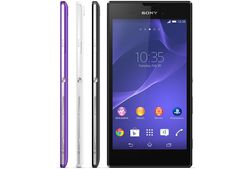 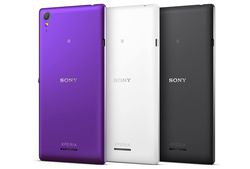
Les différentes finitions du Sony Xperia T3 ( cliquer pour agrandir )
La disponibilité interviendra au cours du troisième trimestre 2014. En fonction des marchés, l’appareil pourra porter la référence D5102, D5103 ou D5106. Reste maintenant à connaître son prix français, qui n'a pas été communiqué.
| |
|
|
|
|
|
|
|
7 plus
29/05/2014 01:38


Le fabricant Hewlett-Packard complète sa gamme de tablettes tactiles avec un modèle 7 Plus positionné en entrée de gamme.
Aux dimensions 19,2 x 12,2 x 0,8 centimètres pour un poids de 295 grammes, il s’agit d’un modèle 7 pouces sous environnement Android 4.2.2 Jelly Bean qui s’appuie sur un processeur ARM Cortex-A7quadruple cœur 1 GHz ( le modèle Allwinner A31 ) couplé une mémoire 1 Go.
Celui-ci propose un affichage tactile multitouch en 1 024 x 600 pixels sur une dalle IPS et une mémoire interne de 8 Go que l’on peut étendre à 40 Go grâce à une carte MicroSD. Sans oublier d’évoquer les 25 Go d'espace de stockage dans le Cloud gratuits à vie.
Il dispose par ailleurs de deux capteurs photo, un 2 Mégapixels à l’arrière et un 0,3 Mégapixel en façade, et d’une connectivité incluant le réseau sans-fil Wi-Fi 802.11n, l’USB 2.0 et l’audio 3,5 millimètres.
À bord enfin, on trouve une batterie Lithium-Polymère à la capacité 2 800 mAh, avec laquelle on peut espérer jusqu’à 12 heures et 30 d’autonomie.
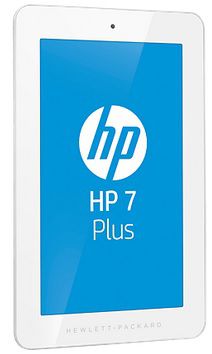 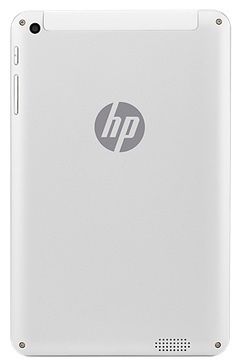
La tablette HP 7 Plus, également référencée 1301 ( cliquer pour agrandir )
Comptez 120 euros, d'après le site français du constructeur.
| |
|
|
|
|
|
|
|
M8 Ace
29/05/2014 01:35


Sitôt sorti, le HTC One M8 a déjà droit à quelques déclinaisons : sous forme de HTC One Mini 2 d’une part mais aussi de One M8 Ace qui se précise.
 Le HTC One Ace devrait être une version du One M8 (lire notre test du HTC One M8) conservant ses performances mais habillée d’un design moins haut de gamme, le tout à un tarif inférieur (au One M8). Comprenez : le HTC One M8 Ace conservera la majorité des composants internes qui positionnent le HTC One M8 à l’avant garde des smartphones du marché mais avec une coque plastique de couleur en lieu et place de l’habillage en aluminium brossé. Le HTC One Ace devrait être une version du One M8 (lire notre test du HTC One M8) conservant ses performances mais habillée d’un design moins haut de gamme, le tout à un tarif inférieur (au One M8). Comprenez : le HTC One M8 Ace conservera la majorité des composants internes qui positionnent le HTC One M8 à l’avant garde des smartphones du marché mais avec une coque plastique de couleur en lieu et place de l’habillage en aluminium brossé.
Voici même qu’une photo publiée sur un site chinois nous fait découvrir le HTC One M8 Ace avant même son annonce officielle.
Le One M8 Ace devrait donc embarquer un Snapdragon 801 avec processeur cadencé jusqu’à 2.3 GHz et afficher une définition 1080p sur son écran de 5 pouces.
Au passage, il devrait (voir photo) toutefois perdre le double flash LED, l’émetteur IR intégré dans le bouton marche/arrêt et le second capteur photo au dos (ne conservant que le capteur UltraPixel de 4 MPIxels à l’image du HTC One de 2013).
Parallèlement, HTC a dans ses cartons une version Prime du HTC One M8 avec affichage 2K et Snapdragon 805.
Des nouveautés à venir que HTC évoque à mots couverts dans un tweet indiquant : « plus de belles courbes arrivent bientôt ».

| |
|
|
|
|
|
|
|
One mini 2
29/05/2014 01:31


HTC officialise son smartphone HTC One Mini 2, successeur du HTC One Mini et reprenant le design du HTC One M8 dévoilé en mars dernier.
Le fabricant HTC n'aura finalement pas mis longtemps à dévoiler un nouveau membre dans sa famille de smartphones 2014. Après le HTC One M8 annoncé en mars dernier et commercialisé peu après, c'est un HTC One Mini 2 qui est annoncé.
Largement dévoilé en amont de son officialisation par diverses rumeurs, il confirme les suppositions autour de ses caractéristiques. Le HTC One Mini 2 reprend le design de la série One / One M8, avec la double grille de haut-parleurs en façade, et propose un affichage 4,5" en résolution HD (1280 x 720 pixels) ainsi qu'un processeur SnapDragon 400 quadcore 1,2 GHz.
Au dos, c'est bien un APN 13 megapixels avec flash LED qui est présent, et non le capteur Ultrapixel régulièrement présent sur la série One. En façade, un APN 5 megapixels va permettre de s'adonner aux joies du selfie avec de bons résultats. La coque reste métallique mais le pourtour de l'écran fait appel au plastique.

Le smartphone profite par rapport au HTC One Mini de 2013 de la connectivité sans fil NFC et d'un port microSD pour étendre les capacités de stockage, ainsi qu'une batterie de 2100 mAh. A bord, on trouveAndroid 4.4 KitKat avec la surcouche HTC Sense 6 introduite sur le HTC One M8.
Le HTC One Mini 2, compatible 4G LTE, n'est donc pas exactement un HTC One Mini M8 tout en étant présenté comme un smartphone dérivé de ce dernier, dans une version plus compacte et aux caractéristiques allégées.
Il sera lancé en Europe et au Moyen-Orient dès le mois de juin 2014, à un tarif de 449 € TTC hors abonnement opérateur.
| |
|
|
|
|
|
|
|
Volt
29/05/2014 01:07

LG launched its new F-series at MWC this week, which consists of the F90 and very similar but smaller F70. The specific F90 that they're showing off is a variant for Sprint, which appears to be named Volt. It's a mid-range Android phone with a 4.7-inch display, Snapdragon 400 processor, and 8-megapixel camera. We took it for a quick spin. Read on for our first impressions.
I'm not sure LG meant to reveal that the F90 is coming to Sprint as the Volt. Nonetheless, poking through the interface, it's clear that the "F90" on display here at MWC is for Sprint. It shows "CDMA/LTE" in the networks section, and the settings menus reveal the name "LG Volt", as well as the model number LS740. LG model numbers that start with "LS" are always for Sprint. On top of that, it has Sprint's "iD" software.
LG Volt Body
Click a thumbnail above for a larger view.
The F90 / Volt falls somewhere in-between last year's F6 and F7. In terms of specs, it's a step down from the F7, but better than the F6. Weirdly, the display resolution is qHD, yet the physical display size is 4.7 inches, which gives it worse pixel density than either of last year's models. It's an okay display for the average consumer, but if you're at all picky about displays, you'll notice the coarse pixels and poor viewing angles. Also, if the phone has an oleophobic coating at all, it's not a good one; the front glass attracts fingerprints, and they don't wipe away easily.
One big spec bump is the battery. The F90 has a 3,000 mAh battery, compared to only 2,540 mAh on last year's F7. That should translate to much longer usage time.
The body is about what you'd expect from a value-oriented mid-range Android phone from a major player like LG.
The front is flat glass. The home button is flat with sharp edges. Those edges make it really easy to find, but also make it a bit uncomfortable to use. Like most LG phones in the last two years, the home button lights up in a variety of colors and patterns to notify you of different things.
Where the front meets the sides, the corners are a tad sharp for my taste. But the sides have a good shape and feel that makes it easy to grip. The phone is overall more rounded that last year's F-series; that's a good thing. The side buttons are great. The back is very basic plastic - no fancy finish or materials here - with a rough texture that hides fingerprints and wear. The phone is average in terms of thickness and weight. Overall the phone feels solid and well-built for what it is, but there's nothing premium about the design; when you pick it up you'll know you're holding a budget device.
The Volt does include an IR port for remote-controlling TVs and stereos, and LG's Quick Remote software. It's nice to see LG adding that to more of its phones. The phone also has Miracast and NFC.
Interface
Click a thumbnail above for a larger view.
The software is only slightly evolved from last year's LG phones. The notification shade has QSlide and customizable quick settings. The camera has Time Catch mode, etc. The Sprint version has the Settings screens arranged all in one list, while the global version splits the settings into four tabbed screens.
The Volt / F90 even has LG's "Smart screen" and "Smart video" features, which can watch your face and keep the screen lit for as long as you look at the phone, and pause video when you look away. Those kinds of features are usually reserved for higher-end phones, but LG has put them in its F-series.
The one new feature LG added and is touting at MWC is Knock Code. This is a mash-up of LG's KnockOn (tap a sleeping phone twice to wake it up) and a PIN code. To use it, start with the phone asleep and locked. Then tap the screen in your security pattern, and the phone wakes up and unlocks all in one step. The security pattern is based on quadrants. So imagine a 2x2 grid, with the four squares numbered 1-4. Your chosen code might be 1-4-1-2-4-3. You unlock the phone by tapping that code in an imaginary grid anywhere on the screen. It could be across the whole screen, or just in one corner. It only matters that your tap for "2" is to the right of your tap for "1", etc. In our testing on the pre-release models on display, the feature didn't always work on the first try. We hope that's fixed in the final software.
The F70 is a small step down from the F90 in terms of display, camera, and battery capacity. But everything else is identical; in fact, the two phones are impossible to tell apart without a ruler. It even keeps the IR port.
Last year's F-series phones were solid Android phones that packed in a ton of features and delivered a good value. The new models look set to carry on that tradition.
| |
|
|
|
|