|
|
[ Apple ] [ Samsung ] [ google ] [ Xiaomi/Poco/Redmi ] [ Motorola/Lenovo ] [ ZTE / Nubia / Red Magic ] [ BBK ElectronicS ] [ Transsion Holdings ] [ Huawei/HonoR ] [ HMD Globale/MicroSoft ] [ Sony ] [ Alcatel/TCL ]
|
|
|
|
HTC Cupid
15/12/2011 15:58
With a name like HTC Cupid, this is certainly a handset for the ladies created by the same Kevin Zhou that brought us the HTC Elegant smartphone. Like the latter, this model runs Windows Phone, most likely in the Mango flavor, since the concept was published recently.

HTC Cupid comes with a 4 inch display, a front camera, a 11mm waistline and most likely a 5 or 8 megapixel camera at the back. 8/16GB of internal memory, Bluetooth, WiFi and 3G are the usual specs to expect from this conceptual design of a HTC. Since it’s probably intended for the ladies, expect a special charm with it and maybe some cool accessories.
Lately HTC launched the Rhyme model for ladies, but that one was based on Android, so why not give the damzels a Windows Phone unit, too? Black Friday is coming and the proper price there will be a HTC smartphone in all the right purses. Unless a Nokia with Windows Phone and pink case has something to say about that…


| |
|
|
|
|
|
|
|
HTC EVO HD, Yet Another 3D Phone
15/12/2011 15:56
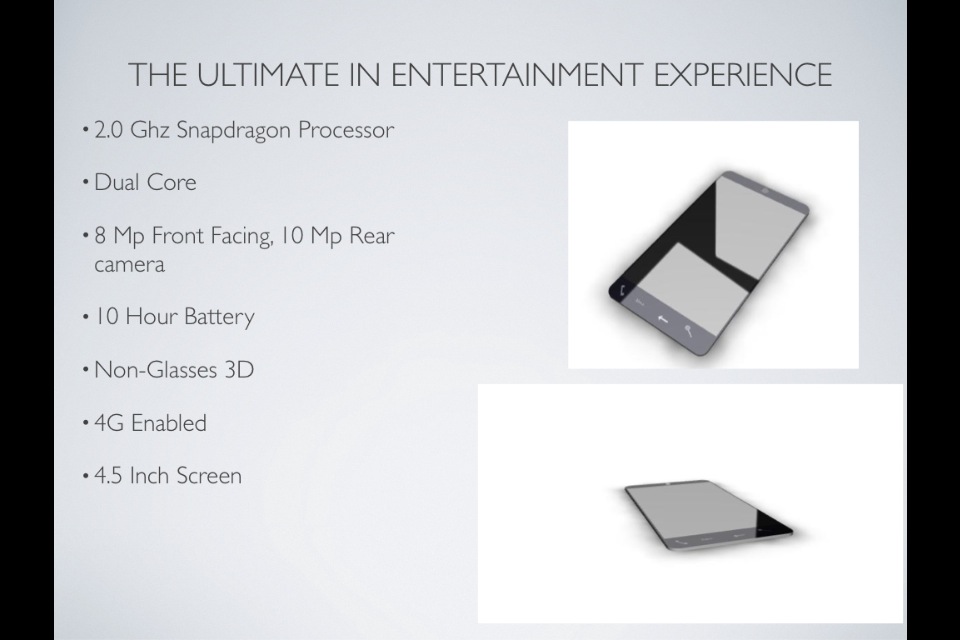
Alexander Black emailed us one of his creations, the HTC EVO HD concept, that can be seen below. We’re dealing here with a very powerful smartphone, one that supposedly uses a 2 GHz dual core Snapdragon processor and a 3D display that doesn’t require special glasses.
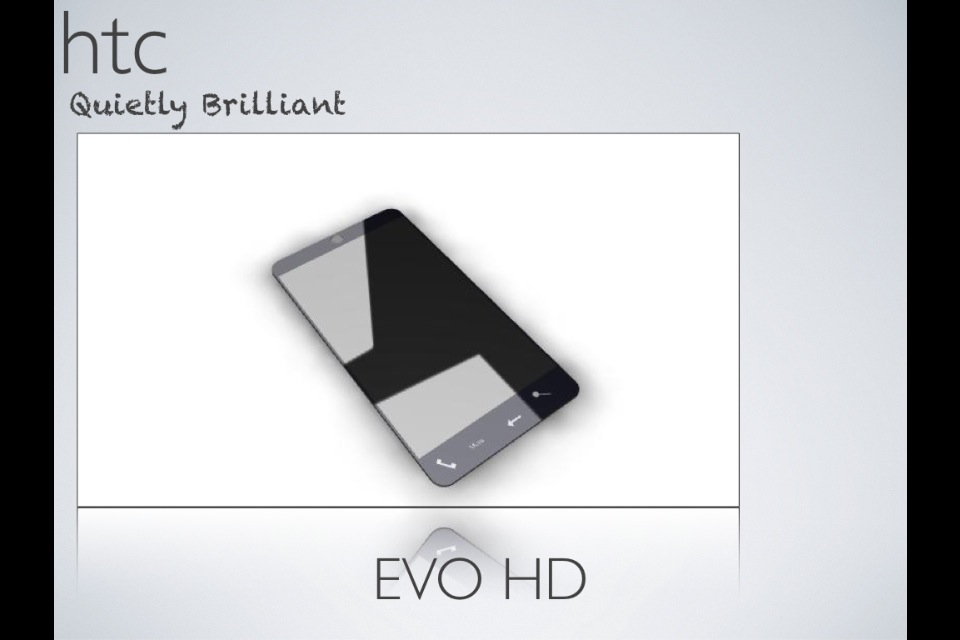
Also, considering the name EVO HD, I’m expecting a 720p display on this smartphone with a 4.5 inch diagonal. The deice also has 4G connectivity enabled, a battery with 10 hours of functioning and an 8 megapixel camera at the front (!!), plus a 10 megapixel camera at the back. The goal here would be HD videocalling, if LTE were available… which is pretty cool actually.
Also, I can’t help but notice how thin this phone is… almost like a credit card and I wonder how they can fit an 8 megapixel and 10 megapixel camera in such a small package. HTC must come up with a very Samsung-like technology to pull off this stunt…
| |
|
|
|
|
|
|
|
Nova Concept Keeps
15/12/2011 15:55
Abhi Aravind has quite a bunch of concepts available on our website, so one more can’t hurt, right? The latest newcomer is the HTC Nova, a superb Android 4.0 Ice Cream Sandwich handset with the ability to play back 1920 x 1080 video, supposedly.

The HTC concept pone uses a 4.3 inch capacitive touchscreen, a 12 megapixel camera with dual LED flash and 1080p video recording, plus a 1GHz dual core processor and 1GB of RAM. 48GB of SSD memory, plus up to 80GB of expandable storage are also available. Filling in the blanks are 4G connectivity, USB 3.0 and WiFi, plus a customizable homescreen.
If Android 4.0 is anything like this, then I’m buying the devices it’ll be available on! As far as the HTC Nova goes, the speaker at the top is a nice touch, while the capacitive buttons at the bottom remind me of the HTC Touch older models, which is always a good thing, since everyone seemed to love those early smartphones.
| |
|
|
|
|
|
|
|
Nebula, 4G Smartphone
15/12/2011 15:51
Abhi Aravind has become a household name here at Concept Phones, since we’ve published a couple of his designs, like the HTC HD3 handset. Now comes another HTC model, the Nebula. This is Android 2.3 Gingerbread smartphone with a 4.3 inch Super AMOLED capacitive screen that Samsung would be jealous of.

The screen of the HTC Nebula supports a qHD resolution and this handset also comes with a 1.2GHz processor, an 8 megapixel camera with autofocus and 1080p video recording, plus 1GB of RAM, 256MB of Nvidia video memory, WiFi, Bluetooth 3.0, GPS and 4G. USB 3.0 and 24GB of onboard storage complete the specs, together with a dedicated music key and surround speakers.
The last two features make me think that this is a music phone and we haven’t had so many of those lately, ever since the touchscreen phone era started. Is there room for a HTC music smartphone out there, considering Sony Ericsson is pulling from the hat very much the same thing?
| |
|
|
|
|
|
|
|
Rezound
15/12/2011 15:47

The Motorola RAZR and Samsung Galaxy Nexus seem to be the two Verizon LTE juggernauts enjoying the lion's share of the spotlight, with the HTC Rezound sandwiched smack dab between the two of them. But that doesn't mean the device has any less to offer -- you might even say it's entitled to some bragging rights. It's not the thinnest phone, nor does it have Ice Cream Sandwich (yet), but being the first carrier-branded handset in the US boasting a 720p HD display should carry a lot of weight. The Rezound -- as you might have gathered from the name -- is also the first HTC gizmo in the States to integrate Beats Audio. So does it fare well against its LTE competition? Is it enough to take your mind off of the Nexus? Read on below to find out.
Hardware
Make no mistake: the HTC Rezound is brimming with goodies. A quick glance at the spec sheet makes this perfectly clear, since the phone offers a 1.5GHz dual-core Qualcomm MSM8660 CPU, Adreno 220 GPU, 1GB of RAM, an 8MP rear camera with 1080p video capture and a 2MP front-facing cam, 16GB of internal storage (10 of which are user-accessible) and an included 16GB microSD card. Last and definitely not least, it's the first carrier-branded phone in the US with a 720p HD display and integrated Beats Audio -- in fact, it comes with a pair of $100 iBeats included in the box (the irony of the name of the headphones isn't lost on us). To sum up, It ain't your run-of-the-mill HTC phone.
With the majority of attention pointed directly at the upcoming Samsung Galaxy Nexus, it's easy for any other high-end smartphone to get lost in the fanfare. The HTC Rezound is a victim of this very scenario, even though its overall features are quite competitive. The successor to the Thunderbolt, this is the Taiwanese maker's second appearance in Verizon's LTE lineup -- which in the past month has suddenly exploded to nearly double the options.

In overall dimensions, the Rezound doesn't hold a candle to the Droid RAZR. The former, measuring 13.7mm thick, is nearly double that of the latter's 7.1mm; even with its depth, the Rezound's still at least thinner than the 14mm Thunderbolt. We're a bit curious as to how HTC's making use of the extra space, since the vast majority of second-gen LTE phones are much thinner than the first -- even the 12mm Droid Charge and 13mm LG Revolution, both of which could be considered first-generation, are thinner than the Rezound. It's also hefty, weighing in at 5.78 ounces (164g), which, as you'd expect, is significantly heavier than the RAZR's 4.5 ounces (127g).
Despite the heft, we were surprised to find that it actually fits snugly in our hands.
Despite the heft, we were surprised to find that it actually fits snugly in our hands, likely because most of the thickness is tapered towards the middle, giving it more of a convex build (its 4.3-inch screen size certainly doesn't hurt either). The soft touch plastic on the battery cover not only adds to the comfort level by making it more grippable, it also keeps the Rezound from picking up fingerprints easily. Unfortunately, the phone's surfaces work no such magic against greasy hands. Eat pizza near the Rezound at your own risk.

Upon looking at the back of the device, we were immediately reminded of the Incredible series. In reality, it's more of a hybrid, mimicking a Droid Incredible 2 with its contours on top that gradually disappear as you continue down the phone's back and eventually merge into a gentle slope that's reminiscent of the bottom of the Vivid. At the crest of these contours, HTC's wisely added a series of textured ridges that offer a touch more friction to the end of your fingertips, which is just another measure to prevent the phone from slipping out of your hands.
The Rezound tries to maintain a wholly minimalist approach in button / port placement. On the left side you'll notice the micro-USB compatible MHL socket near the bottom and secondary noise-cancelling mic closer to the top; the main mic can be found on the bottom of the phone. Drifting right, a volume rocker is found by its lonesome, with no dedicated shutter button to keep it company; the rocker's sunken pretty deep into the side of the phone, making it slightly more difficult to crank up the Beats. Topside is your destination for the power / lock button and a 3.5mm jack for those red headphones in the box that are calling your name.
Display
The HTC Rezound may be the first US carrier-branded device to offer a true HD display, but it's certainly not the first in the world. We've already seen the Samsung Galaxy S II HD, Galaxy Note and LG Optimus LTE, and the Galaxy Nexus will hit the market soon enough as well. Indeed, our choices are about to get pretty crowded here, and we're definitely not complaining about it.
At first glance, the 1280 x 720 Super LCD panel on the Rezound may not seem that much better than the qHD found on the HTC Vivid, or even the Super AMOLED Plus on the Samsung Galaxy S II series -- a screen that continues to impress despite its WVGA resolution. But it's all about the tiny details here: when we looked closer at the Rezound and compared its screen quality with that of the aforementioned devices, we began to see the little things that show the actual worth of having high resolution.
With a resolution of 1280 x 720 on a 4.3-inch screen, the Rezound offers a mind-boggling 342ppi.
The proof is in the ppi -- the number of pixels per inch, also known as pixel density. We'll calculate it out here: with a resolution of 1280 x 720 on a 4.3-inch screen, the Rezound offers a mind-boggling 342ppi. From what we can tell, it tops the charts -- the Retina Display found on the iPhone 4 and 4S is no longer tied for first with the LG Optimus LTE. And not only does the Rezound beat the iPhone's display soundly, it does so with a larger screen size. Rivals such as the Vivid and Droid RAZR are left in the dust, the latter getting beat out by a healthy 86ppi and the former by even more. For a more comprehensive comparison, check out the chart below:

Impressed yet? Let's kick another nugget your direction. This gorgeous display makes this achievement while using a standard RGB matrix configuration; unlike the Galaxy Nexus, no PenTile setup is to be found on the Rezound. Granted, with such a high pixel density, we doubt that tidbit really matters as much as it would on, say, a qHD panel (like the one on the Motorola Droid RAZR, for instance). But it still enables the true high-def resolution to fully shine, and we appreciate the fact that HTC went the extra mile here.
Of course, such high pixel density means that you won't be able to see pixelation with the naked eye, and it's obvious with the Rezound's display. Watching an HD-quality video, as expected, is absolutely stunning; everything appears more life-like, and it's easier to see finer details such as freckles and little hairs. Text turns out incredibly crisp, and it's the most noticeable with smaller fonts; when viewing Engadget, for instance, tiny print appears just as smooth as it does when we zoom in. It's a more satisfying visual experience than seen on the Vivid, which shows more and more jagged edges as the text gets smaller.

Having the opportunity to enjoy 720p resolution on a smallish screen was lovely. The colors seemed to glow with just the right amount of saturation and the screen was viewable in direct sunlight (albeit, only under its brightest setting). The viewing angles were not as good on the Super LCD panel as they were on the Super AMOLED Plus, but we still managed to at least see everything clearly enough when viewing the phone from its side. Should we be excited about the influx of phones that offer such a high resolution? Absolutely.
Camera

The Rezound uses the same 8MP f/2.2 BSI sensor, dual LED flash and 28mm wide-angle lens as the Vivid and Titan, and just like on the other devices, it holds its own here. The camera UI brings memories of the Sensation 4G and made it easy to find everything we needed, offering a full menu of options on the sidebar (as well as an effects icon hidden in the top corner). The camera employs continuous autofocus, so as to make sure it's ready to snap a shot at a moment's notice. It also offers touch to focus, so you can find different objects within the viewfinder to focus on. Sadly, there's no two-stage hardware shutter button on the Rezound, and a long-press of the virtual shutter only tells the camera to focus before automatically taking the picture -- it unfortunately doesn't lock in the focus and / or exposure as we've seen on the Galaxy S II.
We enjoyed seeing the extensive variety of features available on the Rezound. ISO, effects, face detection, white balance, exposure / contrast as well as saturation and sharpness adjustments are all present, all of which are important because they give you much greater control of everything your camera has to offer, letting you make the most of each shot.
There's also a panorama mode similar to the myTouch 4G Slide's SweepShot, which only stitches together a small number of images but offers a shorter pic with much higher resolution than what you'd find in most six-shot panorama pictures. Backlight HDR is another one of our favorite modes because it has the ability to take most poor-lit scenarios and grab more errant light from the high dynamic range for the image (admittedly at the expense of some detail). Close-up is the device's macro focus setting, giving the user the ability to take a well-detailed image while just a couple inches away from an object. Lowlight mode also comes in handy, but we found that HDR works better at capturing backlight; the decision on which one to use will mainly depend on how poorly-lit the object is and how much detail you're willing to sacrifice to get the amount of light you desire. Finally, Action is a shutter priority mode that works great for capturing moving objects.
As we briefly touched upon, the camera fared the worst in low light, but using HDR definitely had a beneficial impact on evening shots as well as pictures taken in the shade. In the instances where this feature was necessary, we weren't too concerned about losing a little bit of detail, since we likely wouldn't have it with the poor lighting anyway. We were impressed by the shots were able to take at full zoom, and our noonday pictures outside resulted in above-average color and detail. Overall, the software and features are top-notch, and we were satisfied with the shots we took, but we still prefer the image quality on the myTouch 4G Slide and the Galaxy S II series.
The Rezound captures video at a maximum resolution of 1080p at 30fps. In most scenarios, the footage we recorded was smooth and our voice came out loud and clear. We specify that this is case in most scenarios, but not all: 1080p video capture turned out okay when our target was either stationary or moving slowly, but it had an issue keeping up with faster subjects like cars. 720p capture, on the other hand, didn't offer any problems with moving objects, though as expected it didn't pick up as much detail. Speaking of which, 720p is enabled on the front-facing video cam, a feature we've already seen in the Vivid but enjoy seeing here as well.
Like the Rhyme and Sensation XL, it throws in the option to record in 2x slow motion. How is this done? By capturing the video at 60fps and slowing it down to 30fps, it maintains the same frame rate as the normal mode so it appears just as smooth. As a disclaimer, this mode can only be used to capture 720p and doesn't allow audio; our juvenile selves were a bit disappointed we couldn't have a little fun listening to our voices run at half the speed.
Software
The Rezound comes with Android 2.3.4 installed, but you probably won't notice it since it's buried underneath the thick skin of HTC Sense 3.5, the latest version of the OEM's proprietary UI. This is only the second device in the US to offer it, with the HTC Rhyme as its predecessor. 'Course, despite the fact that these two phones are running on the same version of Sense, they don't really look that much alike. The Rezound exhibits more of the traditional interface elements, electing to revert back to the same bar at the bottom which gives you the non-customizable choices of app menu, phone app and personalization options (which, by the way, is a perfectly good waste of space when considering you can access this panel by long-pressing the screen or simply tapping on the menu button), rather than the Rhyme's two small icons hiding in its bottom corners. The signature clock is also back by default -- after all, who wouldn't miss the HTC clock if it was banished?
There aren't a whole lot of drool-inducing enhancements in Sense 3.5 that would make you want to go out and root your old phone just to get it. For one, you can get rid of home screen panels now, which is nice if you're anti-clutter; the slow-motion video capture mode mentioned above is also exclusive to 3.5. And lest we forget, HTC and Dropbox have struck a deal which offers 5GB of free cloud storage on the service (by the way, that's 5GB total, not additional to the 2GB that's already included) to any device using the latest version of Sense. Aside from this, any real changes are so minor they aren't worth covering in any extreme detail here.
Of course, it wouldn't be a complete review of the device's software without making mention of the pre-installed apps on the Rezound. Being a Verizon-branded handset, it probably won't take too much guessing for you to figure out how much is on here -- it's saturated with it. Unlike the Rhyme, Big Red left its proprietary tab at the bottom of the app tray to highlight its vast collection of bloatware. Don't worry, you can still find every last one in the main tab just in case.

So what's on the list this go-round? Among others, we'll start off with Blockbuster, Mobile IM, VCAST music and video, My Verizon Mobile, Polaris Office, Slacker and VZ Navigator (someday carriers will acknowledge the presence of Google Maps and Navigation). Throw in a bunch of games and other programs meant to showcase the phone's high-end dual-core CPU with the HD display, like NFS: Hot Pursuit and Let's Golf 2, and the recipe of crapware perfection's complete. And we know you're curious about how many of these glorious space-suckers are uninstallable: none of them. Not a single one. Zilch. Oh, and it gets better -- unlike TouchWiz 4.0, the Sense UI doesn't have any ability to store these eyesores into folders, nor can it even filter them into categories for easier organization. You're stuck with 'em through thick and thin. The only alternative is to use the frequent tab in the app tray to filter down to only those apps you use often. When it comes to bloatware, Verizon's the worst offender, and it appears that it's not getting any better.
Also, here's a breath of fresh air that we didn't see with the AT&T LTE-enabled phones: a homegrown option to turn the 4G service off if you'd rather have better battery life than faster downloads. It's still buried in the settings menu (under Wireless & Networks < Mobile Networks < Network mode), so you'll want to hunt down a handy widget in the Android Market if you'd prefer to have a faster access point.
It's also important to note that while the Rezound currently sports Android 2.3.4, HTC decreed that it's destined and ready to receive an upgrade to Android 4.0 -- also known as Ice Cream Sandwich -- as soon as possible. Chances are that we won't see it happen until sometime early next year, but we understand very well how nerve-wracking it can be to purchase a phone with an uncertain future, not knowing if or when the latest and greatest firmware updates will roll out.
Performance and battery life
The Rezound has a beast rumbling inside it -- namely, a 1.5GHz dual-core Qualcomm MSM8660 (Snapdragon S3) CPU with an accompanying Adreno 220 GPU. This is a splendorous slab of silicon hiding somewhere within that 14mm of thickness, and it shows in the phone's performance. We found the high-end processor to be more than capable of handling our multitude of various simultaneous tasks, and made Sense rather smooth. We never experienced any lags or crashes due to the phone not being able to handle our usual smattering of multitask demands. Here's how the benchmarks turned out:

The Rezound didn't fare so well against the Droid RAZR, but it soundly defeated the HTC Vivid, its AT&T rival. That said, it's difficult to get an accurate comparison in these benchmarks due to its HD display -- and phones that run the heavy Sense skin certainly don't bode well when going to battle with TouchWiz and Moto's not-Blur interface. Regardless, it still managed to pull down respectable scores in virtually every benchmark.
A variety of factors like LTE, HD display, Sense UI and a smaller 1,620mAh power pack all contributed to the phone's subpar battery life. When performing our standard video rundown test, the Rezound ran through looped movies for around four hours and fifteen minutes before shutting off completely, and that was while 4G, WiFi or GPS was turned off. We managed to eke out twelve hours of life when using the device at a moderate pace -- in other words, our usual litany of push email, social networking, taking cameras and videos, and other smallish tasks -- it gave us a battery performance worse than the Droid RAZR, which means you'll definitely need to charge it each night before going to bed. We didn't experience any concerns with call or audio quality, thanks to a strong Verizon network in our local area and the secondary noise-cancelling mic to help filter out unwanted background sounds. We were also able to lock down a solid GPS location in less than five seconds.
Beats
We mentioned earlier that the Rezound's the first HTC device in the US to offer integration with Beats Audio. This fusion is two-fold: first, the music player itself is Beats-enabled, taking advantage of a special sound profile (EQ setting). Second, the Rezound comes included with a set of iBeats in-ear headphones (a $100 value). We've already covered the Beats Audio integration in exhausting and incredibly scientific detail as part of our review of the HTC Sensation XE; since the setup on both sides of the pond is the same, our scientifically justified opinion of the Beats Audio integration hasn't changed.

The tailor-made iBeats headphones that come in the box is, hands-down, the fanciest set we've ever seen included with a US handset. Heck, there are plenty of times that carriers won't even throw in a complimentary pair at all. If you're not a gung-ho music enthusiast and just want a good quality pair of earphones to go with your new LTE treasure, this will be more than you ever bargained for. And quite frankly, they end up offering a good overall listening experience -- as long as you're listening to tracks that are thick on the bass and the Beats Audio is enabled, that is. Even then, it's not that much better than our enjoyment of the HTC Vivid music player using a $100 pair of earphones from a competitor. Also, disable the Beats Audio enhancement and listen as your music dramatically becomes much more quiet, the EQ flattening in traumatic fashion. And there's no way to customize the sound profile to fit your own wishes, regardless of whether Beats is enabled or not.
Sure, it's great to see a phone come with a pair of headphones that doesn't look like it was picked up in a bargain bin, but what's the additional cost to the handset here? While the hardware certainly adds value to the overall phone, the software itself isn't expansive enough for our tastes and we want to be able to customize our tunes to fit our own personal preferences rather than be forced to listen to music the way Dr. Dre intended it to be heard.
Wrap-up

The Rezound is one of the most well-stocked phones we've ever seen. It's certainly got swagger, since it tops the spec comparison charts in nearly every category and even beats out the iPhone's Retina Display. Speaking of Beats, it has those too -- though hardcore music enthusiasts will likely be disgusted by the lack of customizable options. We enjoyed the Rezound because of the display and the phone's overall performance, but you have to be a fan of Sense -- and tolerate the lackluster battery -- in order to place it above the Galaxy Nexus on the wish list.
There's also one other factor at play. Verizon's debuting its newest LTE phone at a premium cost: $300. Until AT&T started releasing reasonably priced LTE handsets like the Vivid ($200) and the Skyrocket ($250 in stores; $150 online), Big Red did a terrific job at making its high prices sound like the norm. We have to admit -- while the Rezound is packed with all of the specs we could want, three Benjamins is still a tough pill to swallow, no matter how wonderful the device is.
| |
|
|
|
|