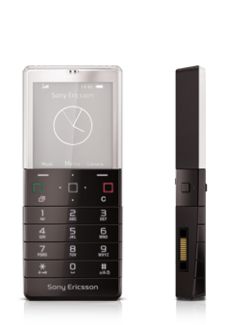
La marque Sony Ericsson vient d'officialiser le Xperia Pureness, un téléphone mobile de luxe qui a été dévoilé en septembre et dont on connaît maintenant toutes les caractéristiques.
Long de 11,2 centimètres pour 4,3 centimètres de large et 1,3 centimètre d'épaisseur, ce téléphone mobile d'à peine 70 grammes annonce une compatibilité GSM / GPRS / EDGE quadribande ( 850, 900, 1 800 et 1 900 MHz ) et UMTS / HSDPA monobande ( 2 100 MHz ).
Il propose un écran 1,8 pouce traité contre les rayures capable d'afficher 262 144 couleurs dans une résolution 240 x 320 pixels ( QVGA ), un lecteur multimédia, une radio FM, un enregistreur vocal, des sonneries MP3, des jeux, une mémoire interne de 88 Mo extensible de 2 Go, une connexion USB 2.0 et la connectivité Bluetooth 2.1.
Quant à l'autonomie procurée par la batterie livrée, elle atteint les 8 heures et demie en communications 2G, les 3 heures et demie en 3G et les 350 heures en veille. C'est plutôt confortable.
Le Sony Ericsson XPERIA Pureness sera disponible d'ici la fin du mois en Europe et vendu aux alentours de 600 euros.
We’ve mentioned Sony Ericsson Kurara once before on our site, but now we have to detail it, in case you’re not familiar with this device. After stumbling upon it on the Esato board, as aconcept created by FlamEmo, we’ve come across a bunch of “live pictures” of the handset, available after the break.
Turns out that this is a Sony Ericsson phone capable of HD video recording and it sports a design that looks very much like that of SE Satio. Kurara should be running Symbian S60 5th edition and it also features an 8.1 megapixel camera and a 3.5 inch OLED display.
So, what’s the deal? Is this device real or a mere Photoshop work? We’ve yet to find an answer for this question, but maybe you can help…
board member and great designer J. Havrlant has finished the Sony Ericsson Arashi concept phone, after showing us a teaser, a couple of days ago. We learn that the handset packs a 4 inch AMOLED touch display and a 12.1 megapixel camera with 3x optical zoom. The designer claims that more details (and probably images) are coming soon and in case you’re wondering, this is a Symbian S60 device. Is this a cameraphone or simply a smartphone with a very, very good camera sensor? When discussing Sony Ericsson concepts, it doesn’t rain, it pours! No less than 3 new designs have hit the Esato board recently and probably the biggest waves were made by Kurara, some of the folks online mistaking it for a real device (or is it?).
We have a look at SE Arashi, pictured below and belonging to famous designer J. Havrlant.
It’s been a while since we saw his works on Esato and we’re guessing that Arashi is a cameraphone, with a full touchscreen display, tons of memory on board, Android or Symbian S60, plus a couple of other interestingfeatures. What do you say?
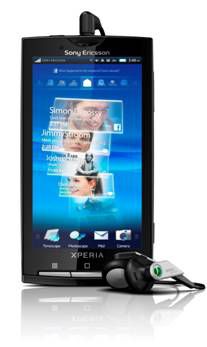
Le fabricant Sony Ericsson vient d'officialiser son smartphone jusqu'à présent connu sous le nom de Rachael ou Xperia X3. Livré avec le système d'exploitation Android dans sa version 1.6 ( nom de code Donut ), il sera finalement baptisé Xperia X10 et disponible dès l'année prochaine.
Proposé dans une finition blanche ou noire, ce terminal au format monobloc annonce une compatibilité GSM, GPRS, EDGE, UMTS, HSPA et Wi-Fi.
Il propose une immense interface tactile 4 pouces traitée contre les rayures gérant 262 144 couleurs en 480 x 854 pixels, une puce GPS, un appareil photo numérique avec capteur 8,1 Mégapixels, autofocus, flash LED, zoom numérique 16x, détection des sourires et géotagging, un lecteur multimédia, une sortie audio 3,5 millimètres pour les écouteurs, une mémoire interne de 1 Go extensible de 16 Go ( une carte de 8 Go est incluse ) et synchronisable via USB / Bluetooth / Wi-Fi.
Et pour alimenter l'engin de 135 grammes, on trouve une batterie 1 500 mAh dont on ne connaît pas encore l'autonomie.
Le smartphone Sony Ericsson Xperia X10 en vidéo
Prix et disponibilité : Ce smartphone sera disponible au cours du premier trimestre 2010, à un prix encore inconnu pour le moment.
Les caractéristiques :
Format monobloc
Compatibilité GSM / GPRS / EDGE ( 850, 900, 1 800 et 1 900 MHz ), UMTS / HSPA ( 800, 1 900 et 2 100 MHz ) et Wi-Fi 802.11 b / g
Processeur : Qualcomm Snapdragon QSD8250 à 1 GHz
Mémoire vive : 256 Mo
Écran LCD tactile 4 pouces, soit 10,16 cm, traité contre les rayures
Affichage 262 144 couleurs dans une résolution 480 x 854 pixels
Puce A-GPS pour la navigation GPS
APN 8,1 Mpix avec autofocus, flash LED zoom numérique 16x, détection des sourires et géotagging
Lecteur multimédia
Prise casque 3,5 mm
Mémoire interne : 1 Go
Emplacement pour les cartes mémoire microSD / microSDHC jusqu'à 16 Go
Port MicroUSB 2.0
Connectivité Bluetooth 2.1
Dimensions : 1119 x 63 x 13 mm
Poids : 135 g
Finition : blanche ou noire
Batterie Lithium-Ion 1 500 mAh
Système d'exploitation : Google Android 1.6 ( Donut )
WakeUpPhone, Cellphone and Alarm Clock at the Same Time
16/10/2009 20:41
Designer Carl Hagerling created an interesting Sony Ericsson concept phone, blending a cellphone with a device that most of us use daily: the alarm clock. It’s true that such devices have died out, in favor of the ones incorporated in phones or watches, but such an idea could give the alarm clocks a new twist.
Sony Ericsson WakeUpPhone shows the time and also works as an alarm clock that’s wake you up in the morning. The Swedish designer of the handset incorporated a tilted display into the concept, perfect for the alarm position, in order to give the user a better view of the time, while sitting on the bed.
This device draws its power from two AAA batteries and also packs a Walkman player, camera and a power button.



 Long de 11,2 centimètres pour 4,3 centimètres de large et 1,3 centimètre d'épaisseur, ce téléphone mobile d'à peine 70 grammes annonce une compatibilité GSM / GPRS / EDGE quadribande ( 850, 900, 1 800 et 1 900 MHz ) et UMTS / HSDPA monobande ( 2 100 MHz ).